
Crawford County Arrest Records and Court Charges
Crawford County arrest records start with law enforcement. The sheriff or arresting agency may document the arrest, booking, custody status, held charges, bond information, and jail location. The court charge record begins later, when the Prosecuting Attorney files a formal charge in Crawford Circuit Court. The two records can match, but they do not have to match word for word because the prosecutor may file different counts than the booking language used at jail intake.
The booking side belongs with custody channels, including the sheriff-linked JailTracker roster discussed on the inmate records page. The court side belongs in MyCase and the Clerk of the Circuit Court records. Court charges after arrest are tracked through the criminal case, so later entries may show amended charges, reductions, dismissals, pleas, convictions, sentencing, or expungement activity. The full case file and final outcome belong in Crawford County criminal court records.
The sheriff source used for this page is the Crawford County Sheriff's Department staff and department source captured for arrest and charge records.
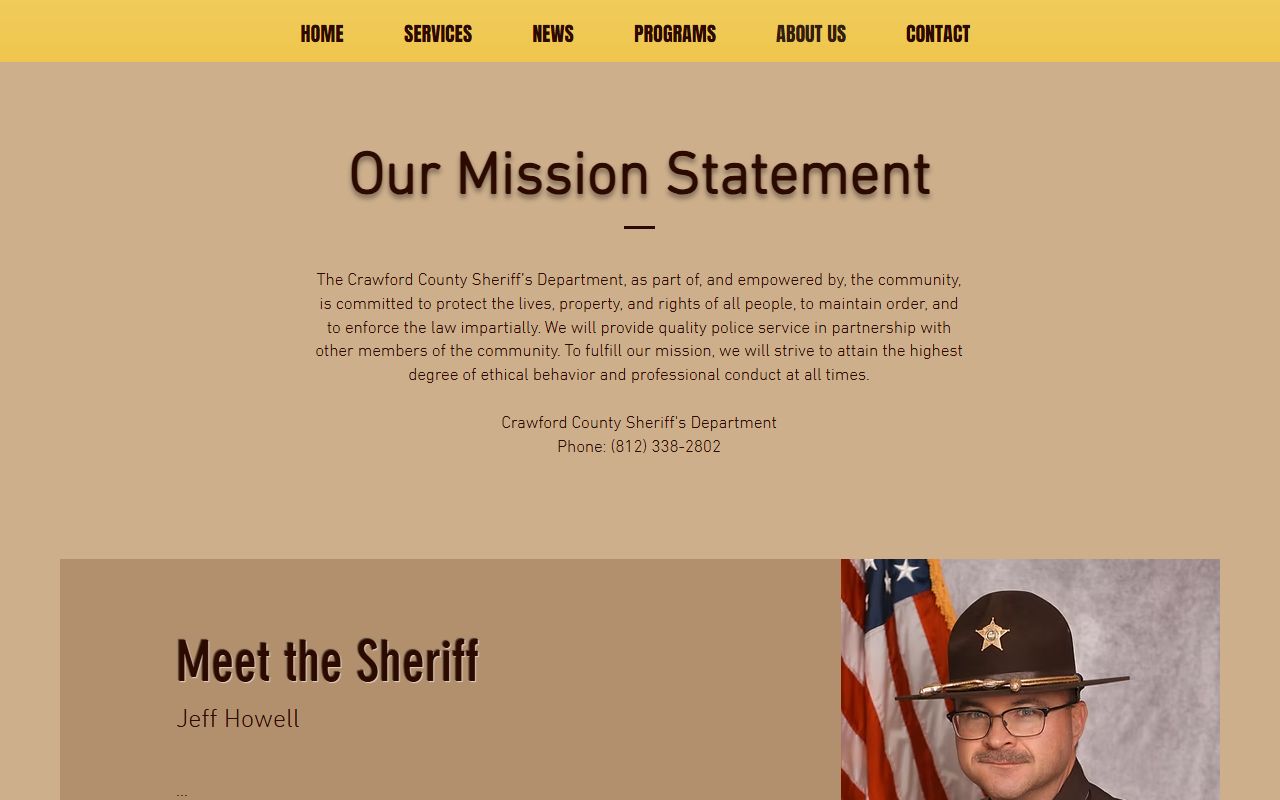
That source supports the local law-enforcement side of arrest records, while the court and prosecutor sources explain formal charge filing.
Find Crawford Arrest Records and Charges
Start with the record type needed. For current custody or recent booking details, use the sheriff-linked inmate search or call the Crawford County Sheriff's Department at (812) 338-2802 and choose the jail extension if custody status is the issue. For court charges after arrest, search Indiana MyCase by defendant name, case number, citation number, or cross-reference number and filter to Crawford County or Crawford Circuit Court.
This split matters when the arrest is recent. A booking can appear before a prosecutor has filed a formal charge, and a MyCase charge can later differ from the booking label. If the person is in custody, confirm status with the jail. If the question is whether the State filed a count in court, use MyCase, the prosecutor source, or the Clerk of the Circuit Court.
- Check the sheriff custody channel when the question is whether a person is currently booked or recently held.
- Open MyCase for the prosecutor-filed court charge record.
- Search by defendant name, case number, citation number, or cross-reference number.
- Open the Crawford Circuit Court case and review each charge's code, level, offense date, and status.
- Confirm official charge status, certified copies, and missing public documents with the Clerk of the Circuit Court.
The sheriff-linked JailTracker custody channel is still useful for booking questions, but the exact roster fields were not visible in static inspection. Follow the on-screen search tools in the roster and use MyCase for the court charge record.
Charges After Arrest Documents
The charge record begins with a charging document. Indiana terminology in the research includes complaint, information, and indictment. Prosecuting Attorney Chase Smith decides many charges after arrest and represents the State in the criminal case. Crawford County's Prosecuting Attorney contact source lists the office at 715 Judicial Plaza Drive, P.O. Box 40, English, Indiana 47118, phone (812) 338-3522. The prosecutor's filing creates the formal court charge that the clerk maintains in the court file.
| Document | Filed By | What It Does | Where It Appears |
|---|---|---|---|
| Complaint | Officer or prosecutor, depending on case practice | States the accusation used to begin or support a criminal case. | Court case file and docket if public. |
| Information | Prosecutor | Formal charging document for many Indiana criminal prosecutions. | MyCase charge list and clerk case file when public. |
| Indictment | Grand jury | Formal accusation returned by a grand jury. | Court case file when filed and public. |
The prosecutor source appears in the Crawford County Prosecutor source captured for arrest and charge records.
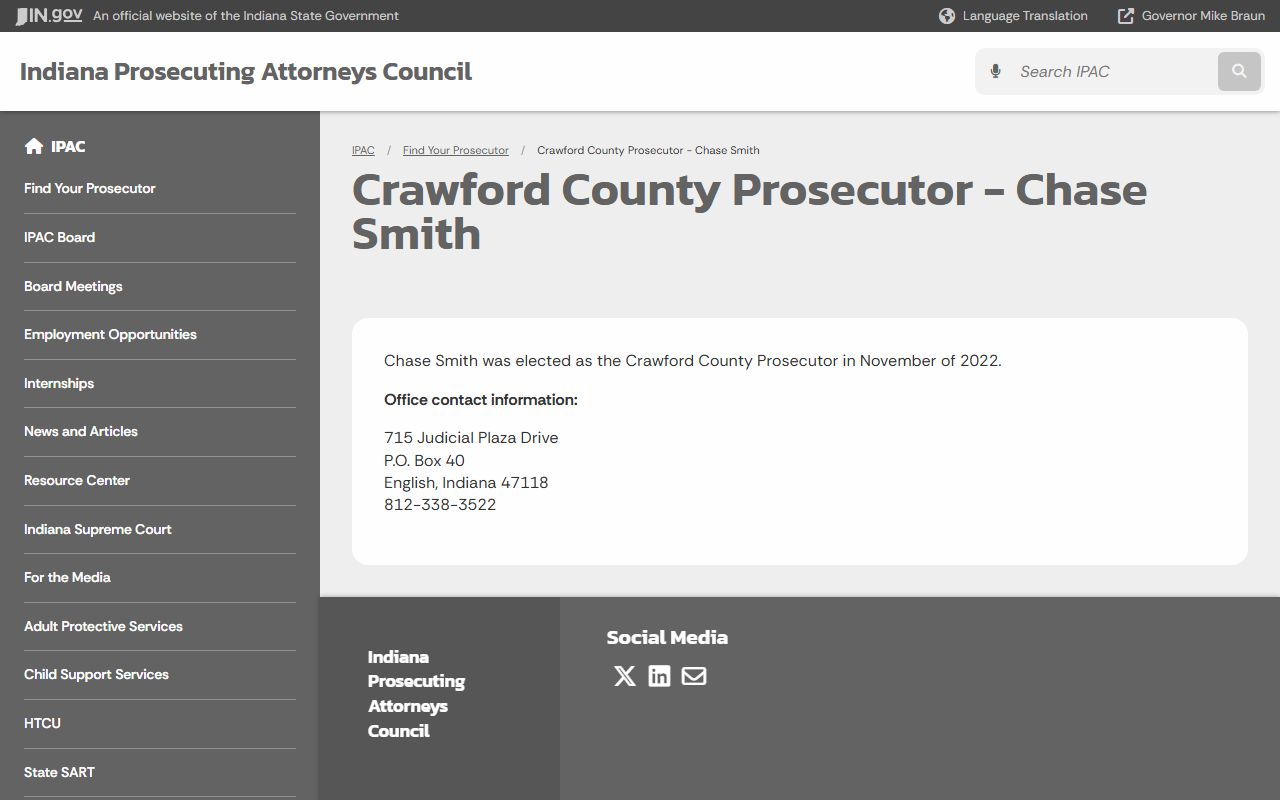
That source confirms the local prosecutor channel for charge questions, while the court record remains the place to check filed counts and case status.
Crawford Charge Status Terms
Charge status can change after filing. A booking description may be replaced by a formal charge. A formal charge may be amended, reduced, dismissed, or resolved by plea or trial. One arrest can lead to several counts, and each count can have a different outcome. Read the court charge list together with the chronological case summary, disposition, and sentence fields.
| Status | What It Means |
|---|---|
| Pending | The charge has been filed and has not reached final disposition. |
| Amended | The prosecutor or court record reflects a changed charge, wording, statute, or level. |
| Reduced | The charge level or offense is lowered, often through plea or amended filing. |
| Dismissed | The court or prosecutor has ended that charge without a conviction on that count. |
| Nolle Prosequi | The prosecutor declines to proceed on that charge, if that term is used in the case record. |
| Disposed | The charge has a final outcome, which may or may not be a conviction. |
Charges vs. Convictions
A charge is not a conviction. Arrest records and initial court charge records may show accusations that never become final findings of guilt. The disposition field is the key. It explains whether a count was dismissed, amended, reduced, resolved by guilty plea, found guilty after trial, or resolved another way. For any formal use, read each count separately.
| Point | Charge | Conviction |
|---|---|---|
| Meaning | Formal accusation after arrest. | Final guilt finding by plea, verdict, or judgment. |
| Record Stage | Appears near the start of the court case. | Appears at disposition and sentencing. |
| Can Change | May be amended, reduced, or dismissed. | May later be appealed, modified, or expunged if eligible. |
| How to Verify | Check MyCase charge details and prosecutor filings. | Check disposition, judgment, and sentence entries. |
Sealed vs. Expunged Records
Indiana law can limit public access to arrest records, charges, juvenile allegations, and convictions. A sealed record is excluded from public access by law, rule, or court order. An expunged record is restricted through a statutory petition and order under Indiana law. Some agencies may still retain authorized access, and the public portal may not show the record after restriction.
| Point | Sealed | Expunged |
|---|---|---|
| Public Access | Hidden or limited because a rule, statute, or order excludes it. | Restricted after a granted expungement order. |
| Common Trigger | Confidential case type, protected filing, juvenile record, or court order. | Petition under Indiana expungement law for eligible records. |
| Arrest Impact | Arrest or charge details may be withheld from public view. | Eligible arrest, charge, or conviction records may become restricted. |
| Best Source | Clerk or court order. | Expungement case, order, and Indiana law. |
Charge Codes and Levels
Court charge records can show offense statute, degree, offense date, modification, original offense degree, and sentence details when public. Indiana criminal case types include Level 1 through Level 6 felonies, misdemeanors, murder, miscellaneous criminal, post-conviction, and older felony classes. Traffic and citation matters can also show citation number, offense statute, disposition, and financial information when filed in court.
Do not assume that a statute code by itself proves conviction. Pair the charge code with the status and disposition. If the court charge record lists several counts, one count may be dismissed while another has a guilty plea. If the record affects bond, custody, employment, licensing, immigration, or expungement eligibility, use official clerk copies and legal advice.
For Crawford County arrest records, also compare dates. The arrest date, offense date, filing date, and hearing date can all be different. The sheriff's booking record may focus on custody intake, while MyCase focuses on the court case after filing. When those dates do not line up, the case number and defendant identity are better anchors than a single short charge phrase.
Statewide Criminal History Lookups
Statewide records can supplement the Crawford court file, but they do not replace it. MyCase shows Indiana court case information for public cases in Odyssey courts. The Indiana Department of Correction offender locator is for sentenced DOC custody. The sex offender registry is a registry, not a complete criminal court index. For charge and conviction details from Crawford Circuit Court, use MyCase and the Clerk of the Circuit Court.
For arrest-side records not found online, call or contact the Sheriff's Department. For filed charge questions, the prosecutor's office may be relevant. For official copies, certified records, and public documents in the court file, the clerk is the local records custodian.
Background Check Considerations
Arrest records and court charge records can be misunderstood in background screening. An arrest does not prove guilt. A filed charge does not prove conviction. A dismissed count can still appear in a public court history unless restricted by law or order. For employment, housing, credit, insurance, or other regulated decisions, use a lawful consumer reporting process rather than informal public lookup alone.
Important: Arrest and charge search results should be verified with official court records before any formal decision is made.
Restricted Crawford Charge Records
Restricted charge records include juvenile matters, sealed cases, confidential filings, expunged records, protected personal data, and records withheld by statute or court order. Indiana Access to Court Records Rule 5 protects many categories of data, and IC 35-38-9 provides an expungement path for eligible arrest, charge, juvenile allegation, and conviction records. If a Crawford charge cannot be found in public search, it may be restricted, older than the available online data, filed under a different number, or not filed in court.
A missing charge record does not prove that no arrest occurred, and a missing booking record does not prove that no court case exists. Crawford County users should follow the access channel that fits the question: sheriff or jail for custody, MyCase for public case status, clerk for official court documents, and prosecutor for filed-charge context when the inquiry concerns the State's charging decision.