
Crawford County Criminal Court Records
A criminal court record is the case-level file kept after the State files charges in court. In Crawford County, the trial-court venue is Crawford Circuit Court. The Clerk of the Circuit Court maintains the court record side of the file, while the prosecutor represents the State and files many criminal charges. The record can include the charging entry, court events, appearances, counsel, bond-related entries, motions, orders, plea entries, trial activity, judgment, sentence, costs, and later probation or post-conviction events.
Do not treat a jail booking as the same record. The sheriff may have custody and booking information, but the court case file is the source for formal charges, plea, disposition, and sentence. For a closer look at prosecutor-filed charges after arrest, use the Crawford County arrest records and charges page. For the entire public case system across all case types, use Crawford County court records.
Indiana's expungement law appears in the source captured for Crawford County criminal court records.
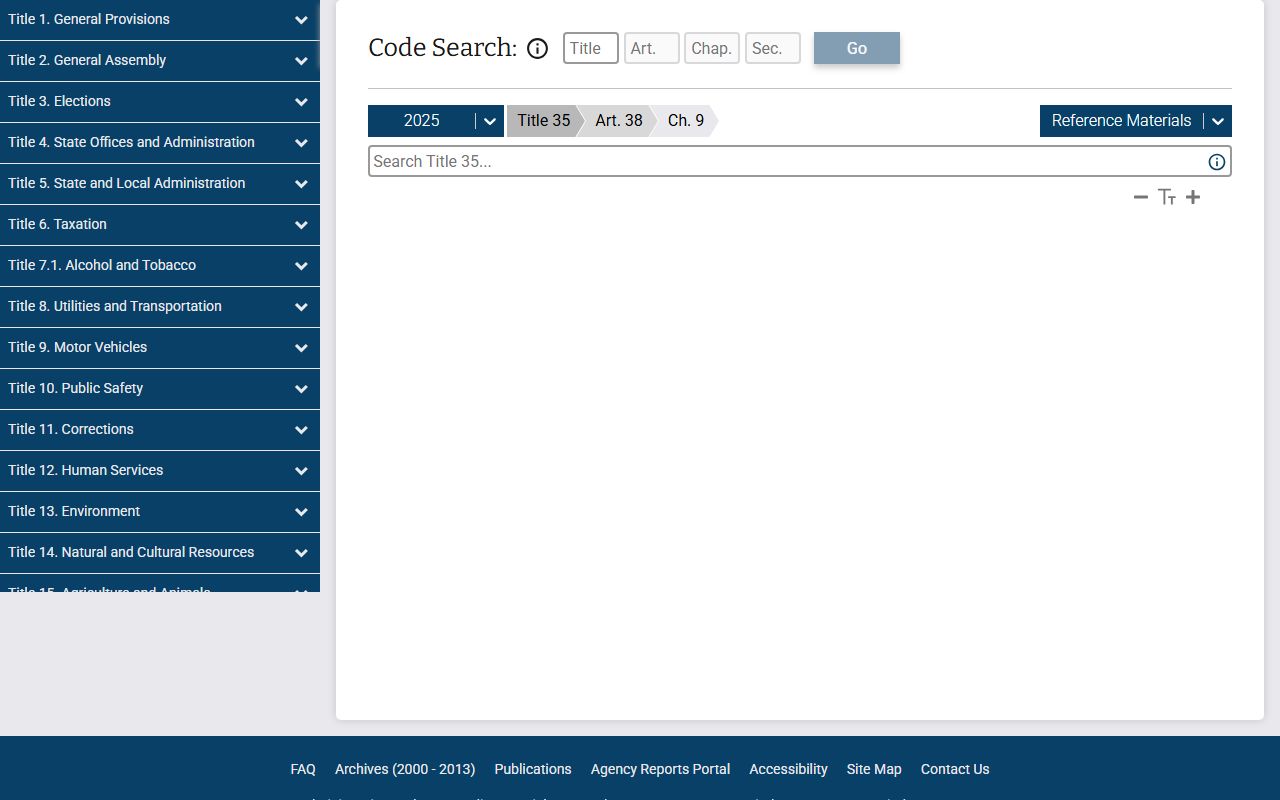
That law matters because eligible criminal cases may later become restricted from ordinary public search.
Search Crawford County Criminal Cases
Crawford County criminal court records are searched through Indiana MyCase. Use the Criminal & Citation category, then narrow the court selection to Crawford County or Crawford Circuit Court if the filter is offered. A defendant name, business name for rare entity cases, attorney name, case number, citation number, or cross-reference number may locate the case. Name searches should be checked against file date, court, case style, and status because statewide results may include people outside Crawford County.
- Open MyCase or the direct public search portal.
- Select Person/Business for a defendant name or Case/Citation/Cross Reference for a known number.
- Limit the court or county field to Crawford County or Crawford Circuit Court.
- Open the case and review charges, docket entries, hearings, disposition, sentence, and financial fields.
- Ask the Clerk of the Circuit Court for certified copies or non-online public documents.
Statewide custody and criminal-history sources are separate. The Indiana Department of Correction offender locator is useful for sentenced DOC inmates, not every Crawford pretrial defendant or closed criminal file. Sex offender registry data is also separate from the court case. The official disposition of a Crawford criminal case should be checked in the court record.
Crawford Criminal Case Flow
A criminal court record changes as the case moves. The first court entries may show charges filed and an initial hearing or arraignment. Later entries can show appearances, counsel appointment, bond activity, discovery, motions, continuances, plea negotiations, trial settings, verdict, judgment, sentencing, probation, or post-conviction filings. Each event becomes part of the chronological case summary if it is public.
Case flow: Charges Filed › Arraignment › Pretrial / Motions › Plea or Trial › Disposition › Sentencing
| Stage | What Happens |
|---|---|
| Charges Filed | The prosecutor files a complaint, information, indictment, or other charging entry that opens the court case. |
| Arraignment | The defendant is advised of the charge and rights, and a plea or scheduling order may be entered. |
| Pretrial / Motions | The parties file motions, exchange information, resolve bond issues, and prepare for plea or trial. |
| Plea or Trial | The case resolves by plea, bench trial, jury trial, dismissal, or other ruling. |
| Disposition | The court records the outcome of each count, such as guilty, dismissed, or not guilty. |
| Sentencing | The court enters jail, prison, probation, fine, fee, program, or other sentence terms when a conviction occurs. |
What Crawford Criminal Records Show
Crawford County criminal court records in MyCase can show felony, misdemeanor, murder, miscellaneous criminal, post-conviction, and older pre-2014 felony class records when public. The court record may also show criminal traffic and citation cases when those matters are filed in court. Indiana's document-access rules make sentencing orders, final orders, and judgments available online for many criminal case types, while other public documents may require a clerk request.
| Field | What It Shows |
|---|---|
| Case Number | Indiana criminal case identifier, including county number, court, filing year, case type, and sequence. |
| Defendant | Name of the person charged, with protected data withheld. |
| Court | Crawford Circuit Court for local criminal trial cases. |
| Charges | Charge description, offense statute, offense date, level or degree, modification, and original offense degree when available. |
| Plea | Guilty, not guilty, admission, denial, or other plea-related entry if public. |
| Hearings | Date, time, type, and court location for public settings. |
| Disposition | Final outcome of each charge, including dismissal, conviction, acquittal, or other result. |
| Sentence | Jail, prison, probation, fine, cost, program, and other court-ordered terms when public. |
| Financial | Costs, fines, credits, payments, and balance, with official totals confirmed by the clerk. |
The Indiana DOC offender locator source captured for Crawford County criminal court records is separate from court case lookup.
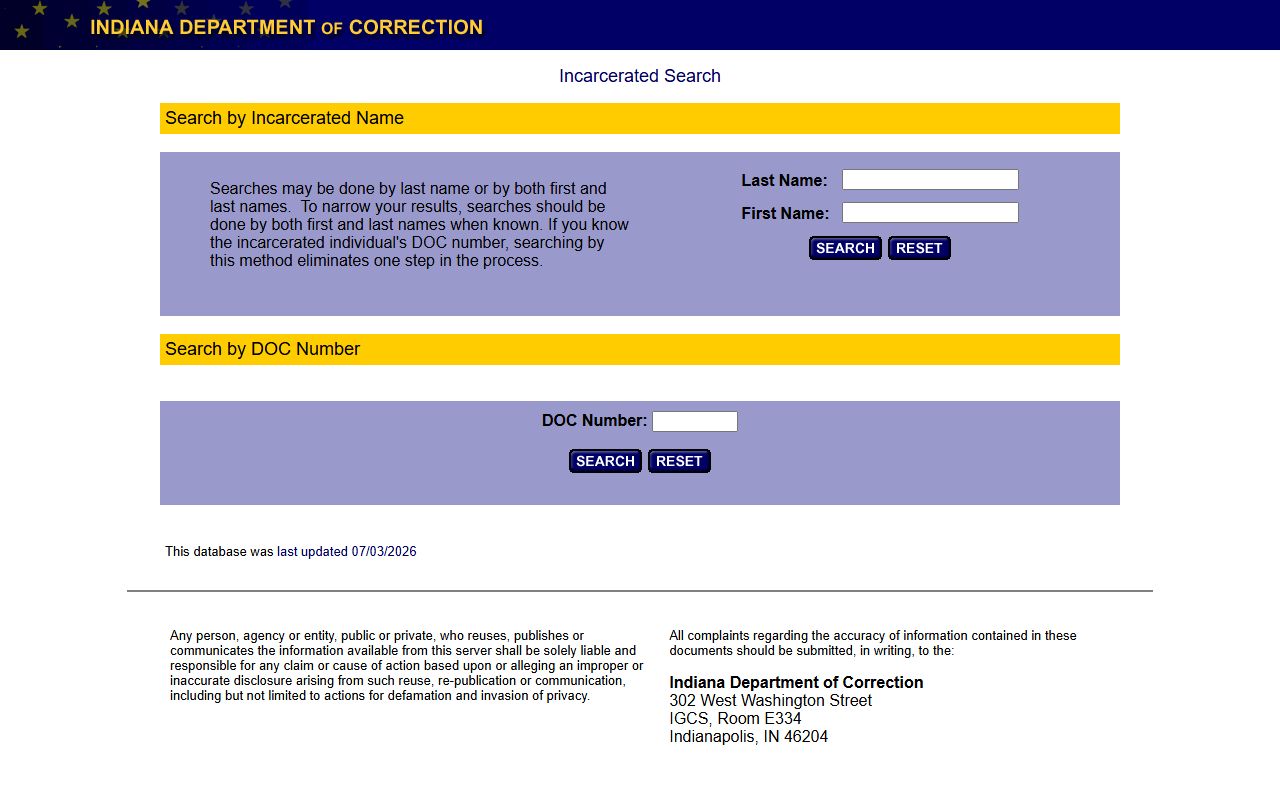
Use DOC custody records only after understanding that conviction and sentence details come from the court record.
Charges vs. Convictions
A charge is an accusation filed in court. A conviction is a final court result after a guilty plea, verdict, or other adjudication that establishes guilt. A Crawford criminal court record can show charges that were amended, reduced, dismissed, or ended in acquittal. That is why each count should be read through the disposition field and sentencing entry, not just the first charge list.
| Point | Charge | Conviction |
|---|---|---|
| Meaning | Formal accusation filed by the State. | Court outcome establishing guilt on a count. |
| Timing | Early in the case, after filing. | After plea, trial, or judgment. |
| Proof Level | Based on probable cause or charging authority. | Requires plea or proof beyond a reasonable doubt. |
| Record Reading | Check for amendments and dismissals. | Check sentence, probation, costs, and later orders. |
Read Dispositions and Sentences
The disposition is the outcome. In criminal court records, look for each charge or count, then read the outcome tied to that count. A case can have one guilty count and several dismissed counts. Sentencing may list jail time, credit time, prison, probation, treatment, alcohol and drug program fees, fines, court costs, no-contact terms, license sanctions, or other conditions. Crawford local rules list an alcohol and drug program fee in misdemeanor and felony cases, but the case docket and clerk should be used for the amount owed in a specific case.
Financial fields in MyCase can be useful, especially when online payment is enabled. They are still not the official final balance. A person using a criminal court record for court action, license issues, employment paperwork, or expungement review should confirm the official status, disposition, and sentence with the Clerk of the Circuit Court.
Sealed vs. Expunged Records
Indiana court records can be restricted by statute, court rule, or court order. Juvenile criminal allegations, some protected information, mental health records, sealed filings, and granted expungements may not appear in public search results. Expungement is a court process under Indiana law, not a clerk counter request. Eligibility and waiting periods depend on the outcome, offense level, and record type.
| Point | Sealed | Expunged |
|---|---|---|
| Public View | Excluded from public access by rule, statute, or order. | Public access is restricted after a granted expungement order. |
| How It Happens | By law, rule, or specific court order. | By petition and order under Indiana expungement law. |
| Who May Still See It | Courts or agencies may retain authorized access. | Law enforcement, courts, prosecutors, and some agencies may retain authorized access. |
| Public Search Effect | The case or document may be hidden or redacted. | The case may be removed or limited depending on the order and statute. |
Public Access to Criminal Records
Indiana's court-record rules allow public access to many criminal case records, but they also exclude confidential material. The Indiana Rules on Access to Court Records and Rule 5 exclusions control much of the public-access analysis. For non-court agency records, the Indiana Access to Public Records Act may apply. For court case documents not online, Indiana Judicial Branch guidance sends the requester to the clerk in the county where the case is heard.
The Indiana public defender links source captured for Crawford County criminal court records explains how trial-level defense help is located by county or court.
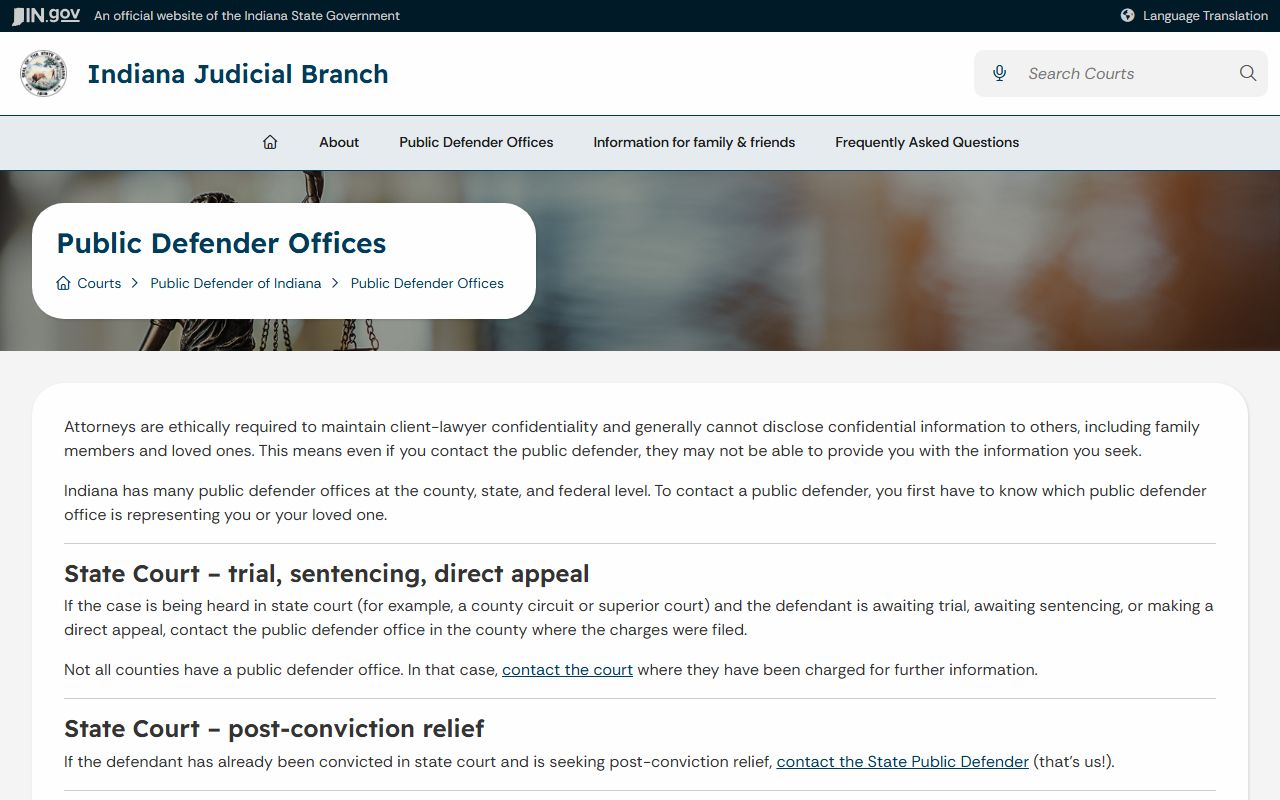
That source is useful for access context because defense appointment questions go through the county where charges were filed or the court handling the case.
Note: Public criminal case lookup is useful for research, but certified copies and official case status come from the clerk.
Background Check Considerations
Criminal court records can be public, but using them for employment, housing, credit, insurance, or other regulated screening is a separate legal issue. A public court search is not the same as an FCRA-compliant consumer report. Records can also lag, contain clerical limits, or omit restricted material. If a Crawford criminal case is being used for a formal decision, use official copies and the proper screening process.
Important: Do not use public lookup results as a substitute for a lawful consumer background-check process.
Restricted Crawford Criminal Records
Restricted Crawford County criminal court records can include juvenile matters, sealed cases, expunged records, confidential filings, protected identifiers, and records covered by court order. Public cases are cases that are not confidential, not sealed, and not expunged. If a record should exist but does not appear, it may be restricted, filed under a different case number, older than the online system covers, or held in a form that requires clerk contact.